TodayTix – Theatre Tickets
- 4.9
- Rating
- 1.00M
- Installs
- Free
- Price

 Analysis by App-foxy
Finding a theatre ticket is easy when you already know the venue, date, and show you want. It becomes less simple when you are choosing at short notice, comparing several performances, or trying to make plans around work, transport, energy levels, or the needs of someone joining you. I found TodayTix most useful in that in-between space: it turns a broad search for live entertainment into a more focused browsing session, while keeping the ticket-buying process inside an app rather than making me jump between theatre websites.
This is a free events app from TodayTix, designed around theatre tickets and local shows. It has been available since Apr 1, 2014, and its current Android version is 2.267.0, requiring Android 6.0 or later. The app is rated for Everyone, which fits its general purpose: it is a practical discovery and booking tool rather than a social network or entertainment game. With over 1M installs and a 4.9 average from around 55K ratings, it has clearly become a familiar option for people who regularly look for performances.
How clearly the app supports browsing and decision-making
I find TodayTix most useful when I’m still deciding what kind of evening I want, rather than when I already know the exact theatre and performance. This section looks at how its browsing flow can turn a vague idea into a shortlist, and why I still pause to check the practical details before committing. That distinction matters most when a promising show has to fit a real schedule, not just catch my eye.
You May Also Like

 Blood Strike: 2.5 Anniversary
Blood Strike’s Loadouts Turn Every Drop Into a Tactical Gamble
A close look at Blood Strike’s custom loadouts: how fast access to signature weapons reshapes its battle royale rhythm, rewards preparation, and narrows the gap between fights.

 Pandora - Music & Podcasts
Pandora’s Music Is Easy to Start, but Harder to Recover
Pandora’s strength is its low-effort path from a seed to a station. Its weak spot is how much confidence it asks you to place in connection, setup, and quiet recovery.

 8 Ball Pool
 Is Built on Rivalries, Rematches, and Routine
A close look at the rivalries, rematches, shared routines, and unanswered safety questions that turn a quick pool match into a persistent mobile community.

 Samsung Music
’s Quiet Strength Is Playing What You Already Own
Its reach comes less from spectacle than from dependable access to a personal library. That simplicity is both the app’s strongest retention engine and its ceiling.

 AccuWeather: Weather Radar
AccuWeather Review: A Quick, Clear Forecast for Everyday Decisions
For everyday plans, the best forecast is the one you can understand quickly. AccuWeather makes rain timing, radar, and local conditions easy to act on, with a few trade-offs.

 Hill Climb Racing
Why Hill Climb Racing Still Turns Crashes Into One More Run
A tiny car, a bumpy hill and one more upgrade: Hill Climb Racing keeps resurfacing because its simple chaos makes every near-miss feel personal.
More From Our News Desk
View All News


Readability matters before the ticket screen
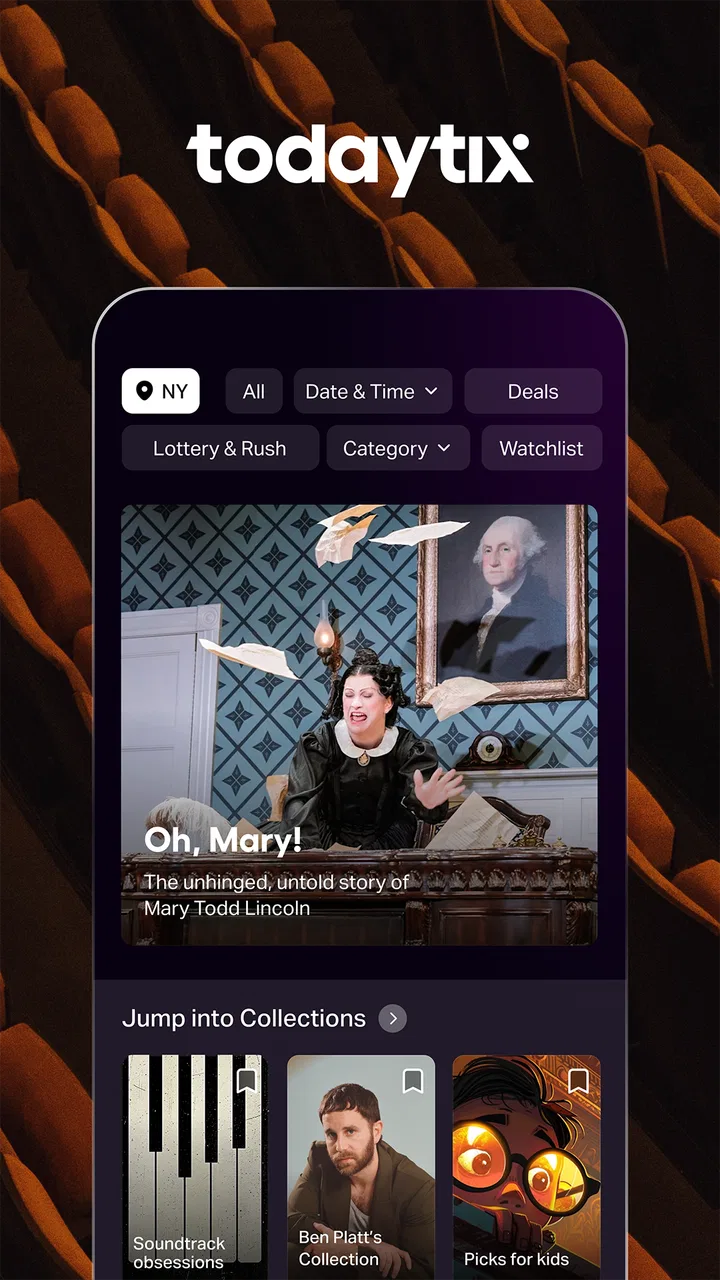
My first impression is that TodayTix works best when I approach it as a visual catalogue. I can browse shows instead of starting with a precise title, which is helpful when I simply want to see what is happening nearby. That makes it more approachable than opening several individual theatre websites, especially for someone who does not follow every venue or production closely.
The useful distinction here is between discovery and certainty. The app can help me notice a performance I had not considered, but I still need to read the individual listing carefully before committing. A show card may catch my attention quickly; the important work happens afterward, when I check the performance time, ticket details, venue information, and any conditions attached to the booking. I would not treat the first attractive result as enough information to make a decision.
For people who find dense websites tiring, a focused ticket app can reduce the number of competing menus and promotional elements. I found that especially helpful when browsing casually on a phone. Instead of beginning with a theatre’s full calendar, restaurant suggestions, membership prompts, and general site navigation, I can concentrate on performances. That narrower purpose is one of the app’s strongest design choices.
Navigation is most comfortable with a deliberate routine
I recommend using a simple routine rather than scrolling without a plan. First, decide whether I am looking for a specific production or just an evening out. Next, narrow my attention to the available performance choices, then pause on the final listing before purchasing. This sounds obvious, but it prevents the common mistake of treating a discovery feed as if it were a complete comparison table.
That workflow is also useful for users who need more time to process information. I can browse first, make a short mental list, and return to the most promising option instead of trying to evaluate every show at once. If I am helping another person choose, I would share the exact performance details with them before payment, rather than assuming that a quick screenshot of a show image tells them everything they need to know.
The app’s high rating suggests that many people find its basic purpose clear, but a strong rating does not remove the need for careful reading. Ticket purchasing is a consequential action. A missed date or unsuitable time is more frustrating than a misplaced tap in an ordinary browsing app, so I prefer to slow down at the final stage.
Text, contrast, and the limits of a compact screen
TodayTix is designed for a phone, and that brings a familiar trade-off. Compact screens make it convenient to browse while commuting or waiting, but they also give less room for long descriptions and detailed comparisons. I found it easier to inspect important information when I was not rushing and when the screen was free from glare.
For readers who enlarge system text or use display settings that change the visual layout, the practical test is whether the key information remains comfortable to read on their particular device. I would not assume that every screen will feel equally clear after changing font size, zoom, or contrast. The safest approach is to check a listing before relying on the app for a time-sensitive purchase.
There is an important difference between readable presentation and accessible content. A clean show image can make a listing attractive, but images do not replace the written facts a person needs to choose a performance. I would look for the actual text describing the event and venue, especially if someone in my group needs to make a decision without depending on visual artwork.
Using the app with different motor and sensory needs
For motor control, the main advantage is that the app lets me handle ticket discovery and booking from a familiar touchscreen rather than navigating a large desktop site. That can be convenient for someone who prefers a short mobile workflow. At the same time, small controls and fast transitions can be difficult for users with limited dexterity, tremors, or a need for extra time between actions. I would avoid purchasing while walking or travelling through a crowded station, where accidental taps are more likely.
The checkout stage deserves particular care. I would keep the phone steady, confirm each selection, and avoid relying on a single quick gesture to verify the order. If I am buying for another person, I would ask them to review the date and venue before completing the transaction. This is a practical accommodation even when no special assistive setting is involved, because it gives the person affected by the choice a chance to catch an error.
For sensory considerations, a theatre-ticket app can be useful because it allows planning away from the venue itself. Someone who finds busy box offices, queues, or noisy public spaces overwhelming may prefer to investigate shows in a familiar environment. I can compare options at home, when lighting and sound are under my control, instead of making a decision under pressure at the theatre.
However, the app does not by itself make the performance suitable for every sensory profile. The experience inside the theatre is separate from the booking interface. I would investigate the show and venue details carefully, and contact the venue directly when I need specific information about seating, sound, lighting, relaxed performances, or other arrangements. TodayTix can be the starting point, but it should not be treated as a substitute for venue-level answers.
Situational access: when the app is genuinely helpful
My most realistic use case is a last-minute evening with a friend. We finish work later than expected, want to see something rather than go straight home, and do not have a particular production in mind. Instead of searching individual theatre sites, I can open TodayTix, browse the available choices, and compare the practical options that fit the evening. The value is not just speed; it is the ability to turn an open-ended plan into a manageable shortlist.
A second useful situation is planning around energy and transport. A performance that looks appealing may be a poor choice if the journey is difficult or the return time is unsuitable. I would check the venue and schedule before becoming attached to the show itself. This is where a ticket app is helpful but not magical: it brings options together, while I still need to judge whether the whole outing works for me.
It can also help when a group has different preferences. One person may want a familiar title, another may prefer something new, and a third may need a particular time. Browsing together on one phone can make the conversation more concrete. Rather than debating theatre names in the abstract, we can look at actual listings and remove choices that do not fit.
For users with limited data, battery, or attention, I would do the exploratory browsing when connected to reliable internet and with enough time to read. Last-minute planning is one of the app’s attractions, but rushing increases the chance of overlooking a restriction or selecting the wrong performance. Convenience is most valuable when it supports a calm decision, not when it encourages an impulsive one.
Where it compares well with ordinary alternatives
The usual alternative is to visit each theatre’s own website. That can be better when I already know the venue, need very detailed seating information, or want to deal directly with the organisation presenting the performance. Venue websites may also be the more natural place to ask about building access or arrangements that are specific to one theatre.
TodayTix is stronger at the earlier stage. It is a useful place to discover what might be worth seeing without already knowing which theatre to search. That makes it particularly suitable for visitors, casual theatre-goers, and people making spontaneous plans. The trade-off is that a broad discovery tool may not provide the same depth of venue-specific context as going directly to the source.
Another alternative is a general web search. Search can find almost anything, but it often produces a mixture of official pages, old listings, reviews, and unrelated results. I found TodayTix more focused for the specific task of looking for shows and moving toward tickets. The app saves search effort, but I would still use the venue’s own information when a detail affects whether the outing is workable.
Remaining barriers before and after purchase
The biggest barrier is not necessarily finding a show; it is knowing whether the selected event matches the needs of everyone attending. A listing can be enough for a quick purchase, but it may not answer every question about the venue, the route, the seating area, or the atmosphere. When those questions matter, I would contact the relevant venue before paying rather than hoping the app’s listing covers every circumstance.
Another limitation is the pressure created by availability. Ticket choices can feel urgent, especially when planning close to the performance date. That urgency can work against users who need more time, use a screen reader or magnification, share decision-making with a carer, or simply want to compare carefully. My advice is to treat the app as a planning aid and preserve enough time for verification.
There is also a social barrier for people who are not comfortable making digital purchases independently. A friend or family member can help with browsing, but the person attending should remain involved in the final choice whenever possible. Reading the event details aloud, checking the selected date together, and saving the confirmation in an easy-to-find place are small steps that make the process less fragile.
Because the app is free to download, the initial barrier to trying it is low. That does not mean every ticket decision is low-risk. The ticket itself, the timing, and the practical demands of getting to the performance still require attention. I appreciate the low entry cost, but I would not confuse it with a guarantee that every available outing will suit every user.
Who should use it, and who may prefer another route?
I would recommend TodayTix to someone who wants a convenient way to explore theatre options, especially when they are flexible about the exact show or venue. It is also a good fit for people who enjoy spontaneous plans, visitors unfamiliar with the local performance scene, and groups that want to browse choices together on a phone.
I would be more cautious recommending it as the only tool for someone with detailed access requirements. The app can help locate a performance, but the venue remains the better source for precise answers about the physical environment and arrangements. A direct theatre booking route may also be preferable to someone who already knows exactly what they want and values the most complete venue-specific information over broad discovery.
Users who dislike mobile checkout, struggle with small touch targets, or need to compare extensive details side by side may find a larger website more comfortable. That is not a failure of the app so much as a consequence of its mobile-first role. I see it as a fast front door to theatre plans, not a replacement for every other way of researching an outing.
An inclusive verdict for everyday theatre planning
After using it as a browsing and ticket-planning tool, I see TodayTix as a strong choice for reducing the friction between “I would like to see something” and “these are the performances that could work.” Its focused purpose is clearer than a general search engine, and its mobile format makes spontaneous discovery practical. The developer, TodayTix, has built an app that feels most valuable before the final purchase: it helps me find possibilities and organise a decision.
Its inclusive value comes from flexibility rather than a promise that every need is handled inside the app. I can browse in a familiar setting, take time away from a busy box office, and involve another person in the choice. Those advantages matter for different abilities and circumstances. The remaining responsibility is to verify the details that affect the real-world outing, particularly when a venue or performance has specific requirements.
The app is free and suitable for Everyone, and its 4.9 average from around 55K ratings reflects a broadly positive reception. I would still judge it by my situation: use it enthusiastically for discovery and convenient planning, but switch to direct venue research when access, seating, timing, or support questions become central. My recommendation is to use TodayTix as the flexible starting point, then slow down and verify the final details before confirming a ticket.
FAQs for TodayTix – Theatre Tickets
01What is TodayTix and how does it work?
TodayTix is a mobile app that provides users with access to last-minute theater tickets at discounted prices. Whether you're looking to see a Broadway show or a local performance, the app offers a seamless, user-friendly experience to browse and purchase tickets. Simply select your desired show, choose your seats, and complete your purchase directly through the app.
02Is TodayTix available in my city?
TodayTix operates in numerous cities worldwide, including major destinations like New York City, London, and Sydney, among others. The app covers a broad range of theater scenes, from big-name productions to local performances. To find out if TodayTix is available in your area, check the app or their website for a list of supported cities.
03How does TodayTix offer discounted tickets?
TodayTix partners with theaters to offer exclusive deals and last-minute tickets at reduced rates. The app leverages unsold inventory to provide users with access to discounts that might not be available elsewhere. These partnerships allow users to enjoy significant savings on high-demand shows while ensuring theaters fill their seats.
04Are there any hidden fees when purchasing tickets on TodayTix?
While TodayTix aims to provide transparency in pricing, users should be aware that service fees may apply to ticket purchases. These fees are typically displayed during the checkout process, ensuring users know the total cost before completing their transaction. Always review the final price breakdown to understand any additional charges.
05Can I cancel or exchange my tickets purchased through TodayTix?
TodayTix has a strict no-refund policy for most tickets, reflecting the common practice within the theater industry. However, they do offer flexible ticket options for some shows, allowing exchanges or cancellations under specific conditions. It's crucial to read the terms and conditions associated with your purchase before finalizing it.
Pros
- User-friendly interface with smooth navigation.
- Exclusive deals and discounts available.
- Wide variety of shows and events listed.
- Secure and fast payment processing.
- Real-time ticket availability updates.
Cons
- Limited to major cities for some events.
- No offline ticket storage option.
- Occasional app crashes reported.
- Limited customer service hours.
- Lacks personalized show recommendations.

TodayTix – Theatre Tickets
Gallery